
ThinkLifecycle is an internal knowledgebase and conversation platform that
can be customised to a company and their unique mix of people, skills
and experiences. Inspired by social networking, it is a Content
Management System (CMS) which can be installed on the same server as a
company's existing website.
From here, registered users (i.e. company staff) can log in to post images, links, comments and articles or to flag concerns. Questions include: how can we reduce waste? Can we offer services such as hiring or collecting the garment at end-of-life? What other fibre options can we explore?
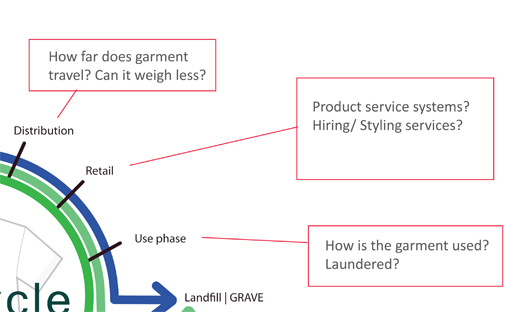
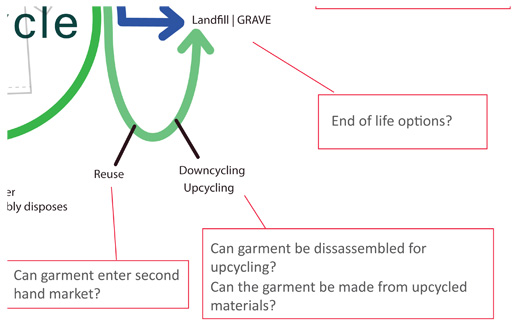
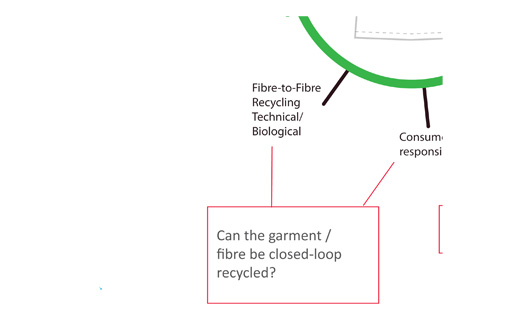
This conversation can evolve into a knowledgebase, one that is unique to the needs of the company and unique to the group of individuals who built it. The content is structured according to the garment lifecycle, from cradle (fibre) through to end of life (grave) and beyond to upcycling or closed-loop recycling systems. Through tagging content according to elements of the garment lifecycle, users are encouraged to think more holistically about where responsibility for garment design can begin and end.Staff can communicate across departments and across stores to develop new collaborations, which can in turn lead to innovative practices.
Why Lifecycle?
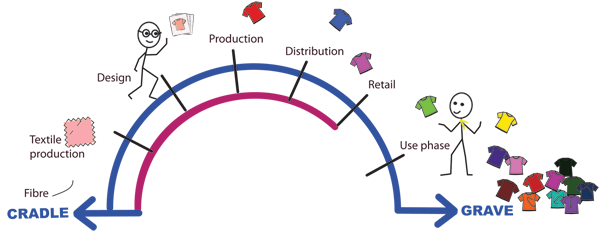
The ThinkLifecycle CMS grew from the need for sustainability to be a central concern within the mass market design process, rather than a tacked-on extra. Mass market fashion is affordable, accessible and democratic. However, it is based on a linear model of production where resources are extracted en masse, manufactured into garments and then sold to consumers, who rapidly dispose of them to purchase new product.
This mode of production does not acknowledge that the resources used to manufacture garments - land, fibre, water and fuel - have physical limits. In 2050, the global population is predicted to reach 9.3 billion people, all of whom have the right to be clothed and fed. A fashion system predicated on wasteful throughput of material goods is not only irresponsible, it is unviable long term.
At every stage, there are environmental and social impacts which need to be acknowledged within the design process. Lifecycle thinking is the starting point. To think in terms of lifecycle means to consider the inputs and outputs of a garment.
What are the impacts of the fibre and textiles used to make the garment? What are the outputs of the garments - what are its environmental impacts during its use phase, how can it be reused, or eventually disposed of?
Speed is also a consideration; for example, faster items can they be designed to disassemble at end of life or designed to be closed-loop recycled, while slower, classic pieces can be repairable, alterable and designed to last.
High volumes of physical product could be reduced by developing product service systems (PSS) such as hiring or styling services.See Reference List.
Asking Lifecycle Questions
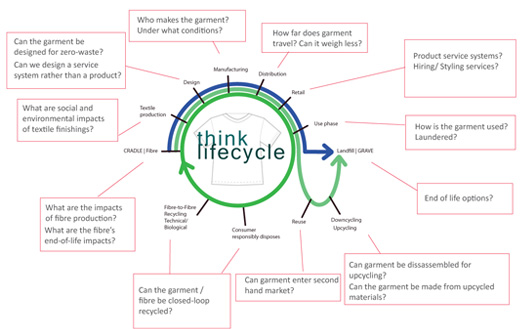
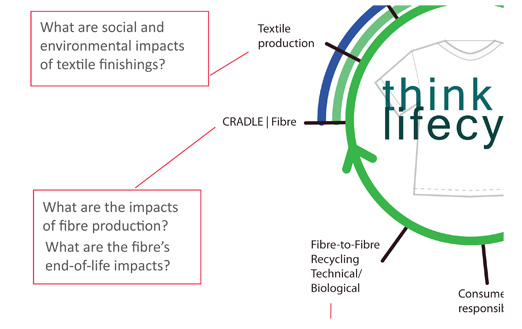
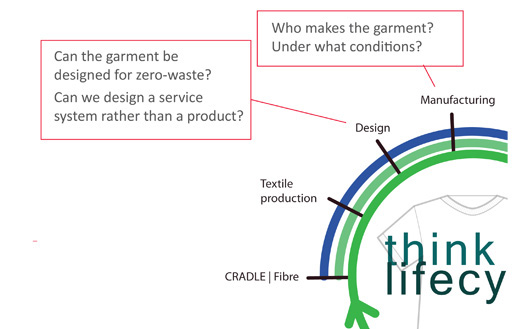
View Credits page for a Reference List of publications which have informed this diagram.